 Blog
Blog
Equipment Maintenance Log Template: 2 Lab Formats
An instrument is needed for a time-sensitive run, but nobody can quickly confirm its last service, calibration context, or unresolved fault. The strongest equipment maintenance log template isn't merely a table of dates. It should identify the asset, preserve what happened and when, separate routine maintenance from calibration and repair, record observations and follow-up, and stay readable when printed, shared, or transferred into an ELN. This comparison evaluates two supplied resources for wet-lab use, then adapts them for service history, downtime, evidence, review, and ELN transfer. It also includes practical fields, customization steps, a usage checklist, and a decision guide.
By Multimod Labs.
Table of Contents
- 1. Lab Documentation Pack
- 2. Lab Protocol System
- Equipment Maintenance Log Templates, Lab Documentation Pack vs Lab Protocol System
- Choose the Format Your Lab Will Actually Maintain
1. Lab Documentation Pack
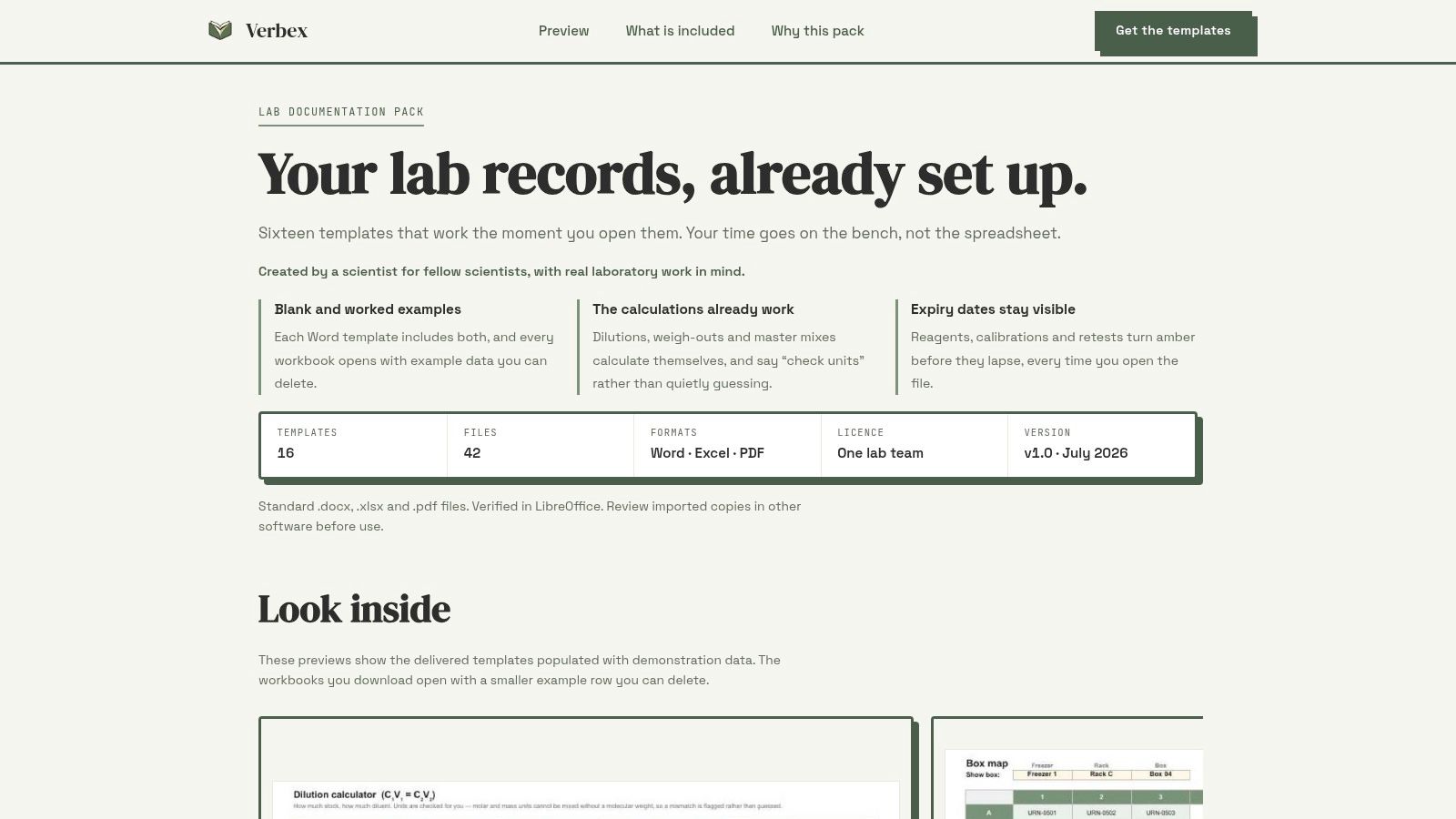
A freezer alarm sounds during a time-sensitive run, but the team cannot tell whether the unit was serviced, checked after the alarm, or released for use. The Lab Documentation Pack offers a practical starting point for recording that history alongside related laboratory records. A free blank Lab Notebook Entry PDF is available on the Lab Documentation Pack page.
The pack is useful because equipment events often affect more than the instrument itself. A freezer fault may put samples on hold. An incubator excursion may require an experiment review. A balance issue may affect results and trigger a deviation record. Connecting maintenance entries with experiment, sample, and deviation records helps preserve those consequences instead of leaving them in separate notes.
What works at the bench
The supplied formats fit different working conditions. An Excel log is practical for filtering equipment IDs, work types, technicians, statuses, and due dates. A Word form works well as a controlled, printable service record. A PDF can serve as a stable blank form or reference copy. The trade-off is version control. If technicians edit separate files, the lab needs one master location and a clear rule for which copy is current.
A useful entry should identify the equipment name, asset ID, manufacturer, model, serial number, location, date and time, work type, responsible person, procedure or SOP followed, observations, readings, parts or materials used, corrective action, current status, and next due date. Equipment inspection documentation from OSHA illustrates why the inspection date, identifiable inspector, and serial number or other unique identifier belong in the record OSHA equipment inspection documentation. “Centrifuge checked” does not show which centrifuge was inspected or what the check established.
Practical rule: Another scientist should be able to identify the asset, reconstruct the work, review the supporting evidence, and see whether the instrument was released for use.
The maintenance section should separate preventive maintenance, function check, calibration, unscheduled repair, and cleaning or decontamination. These categories have different purposes and review requirements. A single free-text notes field makes it difficult to distinguish routine servicing from a failed check or a return from external repair.
Where customization is essential
Wet-lab teams should add a scientific impact block to the administrative service history. Where relevant, record affected experiment IDs, samples, runs, raw-data files, acceptance criteria, and a disposition such as results unaffected, repeat required, or data placed on hold. The laboratory equipment test guidance helps frame equipment checks as evidence for a usable record rather than isolated completion marks.
Calibration needs its own compact fields: method or certificate reference, standard used, acceptance criteria, observed result, traceability information where appropriate, reviewer, and next-due date. This context lets a reviewer distinguish a completed calibration from a simple function check and find the evidence supporting the decision.
For a failure, record removal-from-service time, reason, corrective action, service provider, return-to-use time, verification evidence, and any change to the maintenance or function-check procedure. WHO equipment management guidance includes these elements within a complete equipment history WHO equipment management guidance.
Before adoption, set one master version, define who completes and reviews entries, and specify where certificates, photographs, service reports, and raw readings are stored. Map the fields to the existing ELN before copying records across. The template can standardize capture, but it is not a validated system, approval workflow, calibration program, or regulatory sign-off mechanism.
2. Lab Protocol System
A maintenance event often exposes a documentation gap. A technician completes a cleaning or repair, but the record does not identify the governing procedure, acceptance limit, or evidence supporting return to use. The Lab Protocol System addresses that gap by connecting equipment work to the documents that define and review it.
It provides templates for a master protocol, experiment plan, SOP, change record, and deviation log, each with a worked example, in Word and PDF. It is available as part of the Lab Documentation Pack described above. A free blank Master Protocol PDF is available through the protocol template collection.
For wet-lab equipment, the format works best when maintenance records sit beside controlled procedures. The log records what happened. The SOP defines what should happen. A change record explains why an interval, cleaning method, or verification step changed. A deviation log records when work was late, incomplete, or outside the approved method. Linking these documents helps a reviewer see which instruction governed the service event.
The trade-off is its scope. Protocol templates are not an asset register or service-history database. They do not provide the most practical interface for filtering every freezer, balance, centrifuge, or biosafety cabinet by status and due date. They also do not demonstrate that a procedure has been validated or approved. Use them as documentation components, not as a replacement for an equipment-control system.
Adapt the protocol structure for equipment work
A maintenance SOP should define each task, state its frequency, identify required parts or materials, and specify how the result is recorded. WHO maintenance documentation guidance separates routine maintenance, function checks, calibration, troubleshooting, manufacturer service, and spare parts. That separation prevents a broad notes field from hiding different types of evidence and review.
Adapt the protocol templates by pairing each maintenance entry with the controlled document used at the bench. Useful fields include:
- Procedure reference: Identify the SOP or work instruction followed.
- Task classification: Mark preventive maintenance, inspection, calibration, repair, cleaning, or verification.
- Acceptance criteria: State the condition or limit required before release.
- Evidence reference: Point to a certificate, photograph, service report, instrument printout, or raw-data location.
- Disposition: Record in service, out of service, restricted use, repeat required, or data on hold.
Add fields for asset identifier, service date, downtime, technician, parts replaced, and return-to-use approval when the existing log lacks them. Downtime matters because a service event can affect scheduling, sample storage, instrument availability, and planned runs. A concise protocol format keeps the required actions visible, while the maintenance history should remain searchable by asset and event.
For analytical instruments and other equipment that can affect scientific conclusions, connect a failed check to affected runs, samples, and data files. Record the reviewer's decision and the evidence used to reach it. The protocol format makes that decision path easier to define, but completed service records still need a controlled operational location.
When the procedure-first format wins
The Lab Protocol System suits laboratories standardizing new equipment procedures, documenting recurring tasks, or coordinating changes across a small team. A change record can explain a revised maintenance interval, cleaning method, verification step, or approved material. A deviation log can preserve what happened when a task was late, a check was out of tolerance, or a service visit interrupted planned work.
Review needs to cover more than a completion mark. Good Clinical Laboratory Practice guidance recommends accessible maintenance and service records, with laboratory director or designee review, signature, and date at least monthly to establish an audit trail Good Clinical Laboratory Practice guidance. Add fields for actual completion date, schedule deviation, operator identity, reviewer, review date, corrective action, and closure status.
A procedure tells the technician how to maintain the instrument. The log proves what the technician actually did.
The free Lab Protocol Template Builder can help a team draft a method or SOP structure before adapting the maintenance record. Teams can also browse documentation examples for other ways to organize process evidence.
The strongest use of this format is to make each maintenance entry reference its governing procedure, deviation, change record, and evidence location. Map those fields to the existing ELN before transferring records. The templates can standardize capture and improve review, but they remain templates, not a validated system, approval workflow, calibration program, or regulatory sign-off mechanism.
Equipment Maintenance Log Templates, Lab Documentation Pack vs Lab Protocol System
| Item | Core templates | Target audience | Key benefits / USP | Price & trial | Formats / delivery |
|---|---|---|---|---|---|
| Lab Documentation Pack (16 lab record templates) | 16 editable templates (42 files): protocols/SOPs, inventory & sample workbooks, lab notebook (ALCOA+), experiment plan, deviation, calibration & maintenance, equipment logs | Lab teams; wet‑lab biologists, chemists, PhD students, postdocs, biotech RAs | Comprehensive GLP/GMP‑oriented kit; first‑party; ready‑to‑use templates for data integrity and recordkeeping | US$9 one‑time (was US$19); includes 2 months Verbex free; free blank Lab Notebook PDF | Word, Excel, PDF; instant download |
| Lab Protocol System (Word & PDF protocol templates) | Master protocol, experiment plan, SOP, change record, deviation log, each with worked example; part of the 16‑template pack | Researchers writing methods, SOP authors, lab managers | Focused protocol writing tools with worked examples to standardize methods; complements full pack | Included in the Lab Documentation Pack (US$9 one‑time); free blank Master Protocol PDF; 2 months Verbex free | Word and PDF (worked examples); instant download |
Choose the Format Your Lab Will Actually Maintain
Choose the Lab Documentation Pack when the laboratory needs a broader set of editable Word, Excel, and PDF records, especially when equipment maintenance must connect with lab notebooks, deviations, calibration, inventory, sample, and monitoring documentation. Choose the Lab Protocol System when the immediate need is to place maintenance beside procedures, change records, and deviation documentation. The first is broader. The second is more procedure-centered.
Either format can be adapted into a useful equipment maintenance log template, but neither replaces an official ELN, validated system, calibration program, approval process, or regulatory sign-off. A template supports consistent capture and can support clearer traceability. It doesn't guarantee compliance or establish the scientific validity of a result.
Before adoption, the lab should:
- Identify every asset: Use equipment name, asset ID, manufacturer, model, serial number, and location.
- Separate work types: Distinguish preventive maintenance, inspection, calibration, verification, cleaning, and repair.
- Define ownership: Record the responsible technician, service company, and reviewer.
- Capture work contemporaneously: Document dates, times, observations, readings, parts, procedures, and status.
- Attach evidence: Reference certificates, service reports, photographs, instrument outputs, and affected experiment records where appropriate.
- Review and transfer: Complete supervisory review, resolve deviations, and move the finalized record into the lab's established system.
The paid Lab Documentation Pack costs US$9 one-time for one lab team and includes 2 months of Verbex free. For teams that need to capture observations while working at the bench before organizing them into an official record, Verbex can provide a separate source-capture step rather than replacing the maintenance system.
Verbex helps wet-lab scientists capture bench observations with voice notes, typed notes, timers, and images on iPhone and iPad, then review and export a source-backed record for an existing ELN workflow. For equipment maintenance, that can preserve the timing, visual evidence, and unexpected details that are easy to lose before the formal log is completed. Visit Verbal Experiment to explore the app and documentation tools.