 Blog
Blog
FDA Guidelines on Data Integrity: A Practical Lab Guide
FDA defines data integrity as the completeness, consistency, and accuracy of data, and it expects regulated firms to use risk-based controls to prevent and detect failures. In a busy lab, that usually matters most when an observation happens before anyone has time to sit down and write it up.
By Multimod Labs.
At 4:40 p.m., the assay is still running, one timer has just gone off, and someone is already reaching for a centrifuge tube while another person notices a color shift in the well plate. That is where documentation usually breaks, not in the final report, but in the gap between what happened and what got preserved.
A note gets scribbled on a glove. A detail lands in a phone note with no timestamp. Someone trusts memory and reconstructs the event later from a polished summary. None of those habits is harmless, because FDA inspection thinking follows the data from the first observation through the final record, not just the signed conclusion. The agency's 2018 guidance is explicit that every CGMP-required record is subject to inspection, including electronic communications that support CGMP activities, so the lifecycle of the record matters as much as the report at the end.
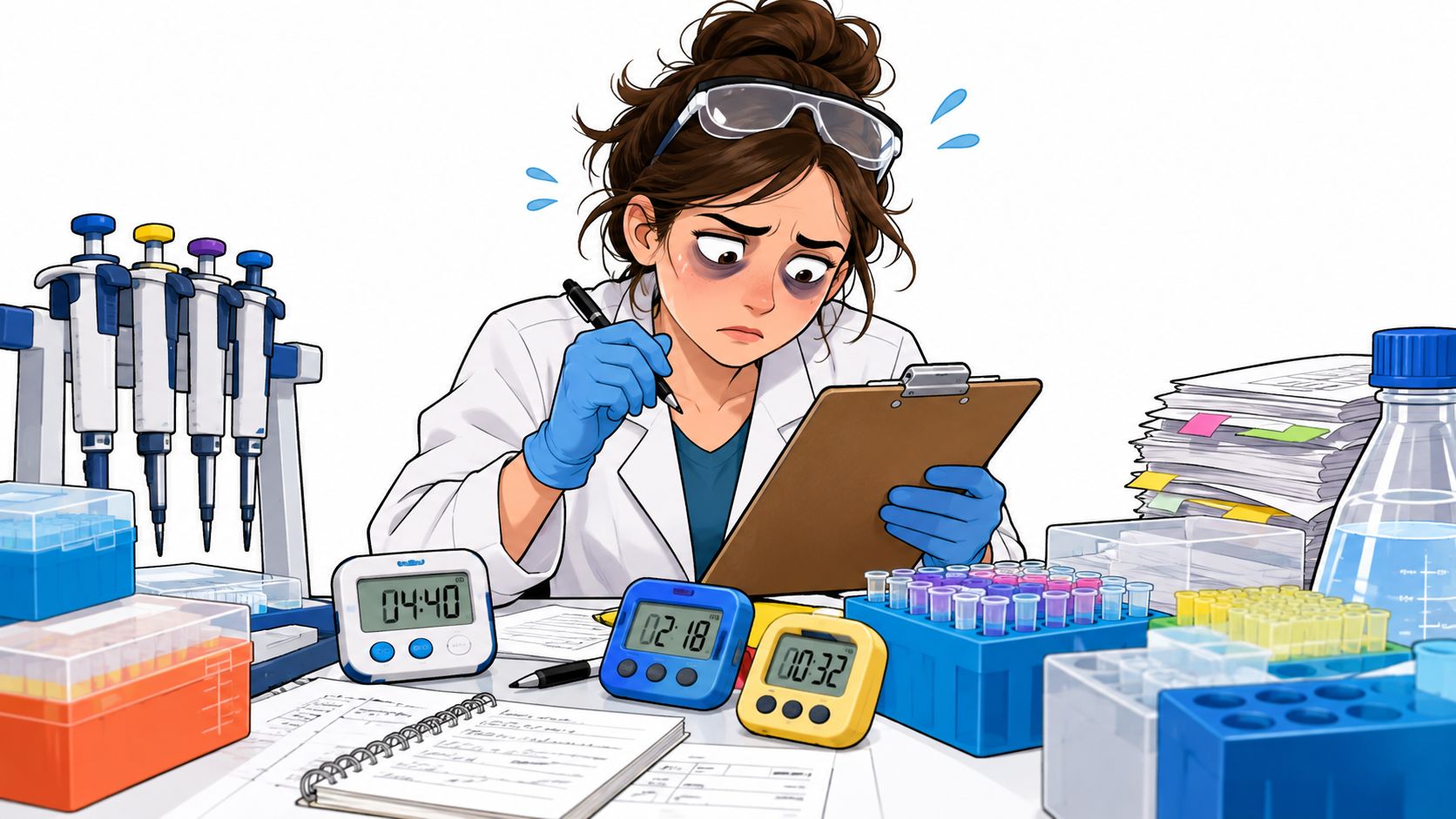
Table of Contents
- Why Data Integrity Breaks Down at the Bench
- Understanding the ALCOA Plus Framework
- Electronic Records and Audit Trail Requirements
- Capturing Bench Reality Before Transcription
- The Gray Area Between Research and Regulation
- Building an Inspection-Ready Documentation Workflow
Why Data Integrity Breaks Down at the Bench
The bench is where the protocol meets reality, and reality rarely pauses for clean documentation. A scientist may need both hands on the instrument, eyes on the readout, and enough attention left to notice that a reagent looks off or a timer drifted. That is exactly when bench notes become fragile.
The first loss is usually context
A fragment written on scrap paper can preserve a fact without preserving its meaning. The lab later sees the number, but not the sequence of actions, the operator, the correction, or the condition that changed the outcome. FDA's data-integrity framework cares about that full context because raw data, metadata, calculations, audit trails, electronic records, and related communications may all be relevant during an inspection.
Practical rule: if the note can't help another scientist reconstruct what happened, it's not a strong source record.
The pressure point is usually not fraud. It's speed. Bench scientists move quickly, and a later transcription step can turn a real observation into a memory exercise. That's where errors creep in, especially when people copy only the final answer into an ELN and leave the source details in the margins, on a glove, or in a verbal handoff.
The FDA does not care that the final report looks neat
A polished summary can still be weak evidence if the original observation can't be traced back. The FDA's guidance makes the expectation broader than a signed report, the record has to remain reliable, traceable, and available throughout its lifecycle. For a lab manager, that means the weak point is often the handoff between “what happened at the bench” and “what got entered later.”
Teams often get caught during inspections, because the official record may look clean while the underlying trail is incomplete. If the operator cannot show when the observation was made, who made it, and what changed before the final entry, the record is exposed. In practice, this is the difference between a lab that can explain its work and a lab that has to rebuild it from memory.
Understanding the ALCOA Plus Framework
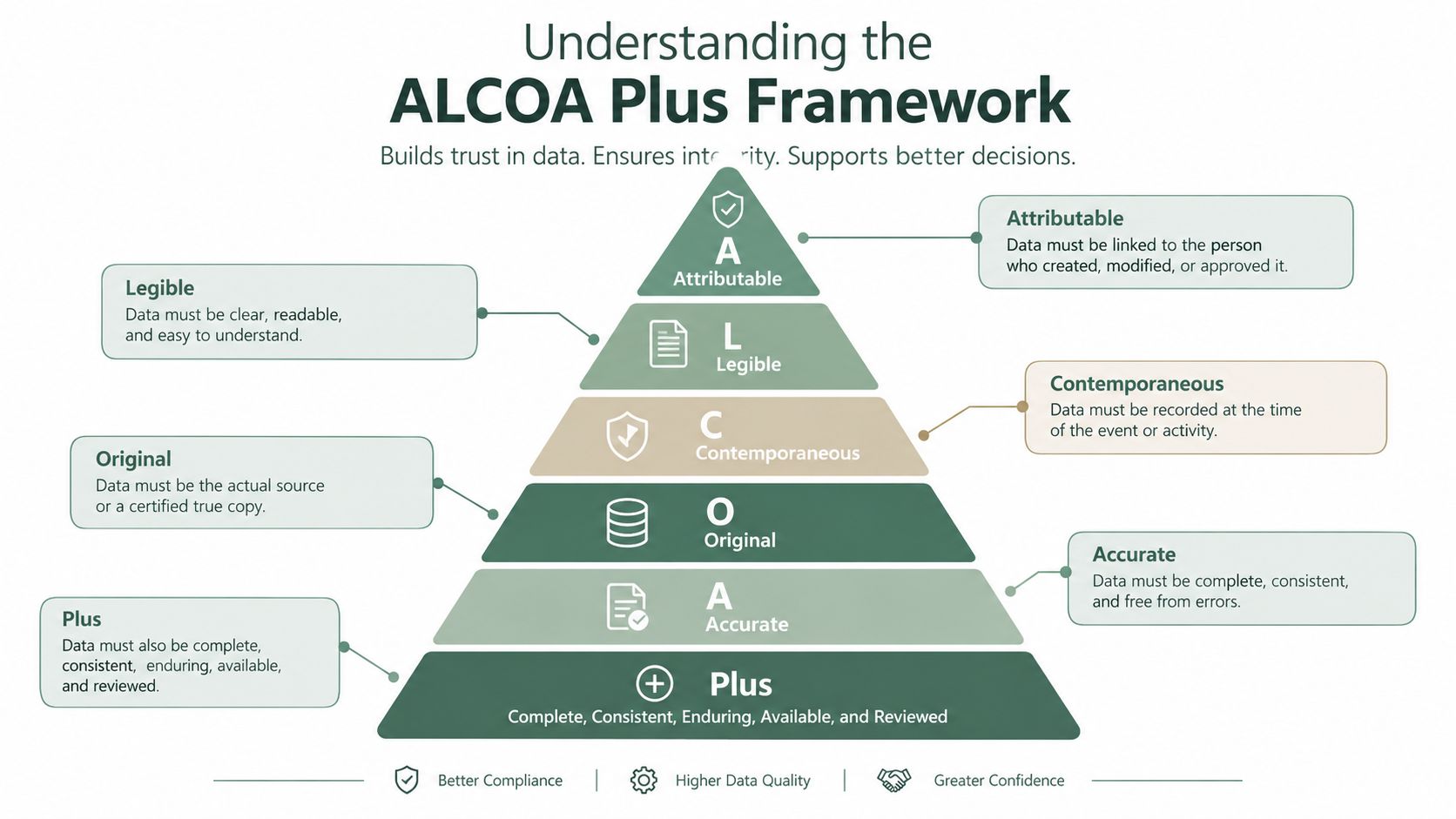
A bench note only holds up if it can still explain what happened after the run is over. ALCOA is the practical test for that, Attributable, Legible, Contemporaneously recorded, Original or a true copy, and Accurate. ALCOA+ adds Completeness, Consistency, Endurance, and Availability, the parts that usually separate a tidy notebook from a record that can survive inspection.
Turn the acronym into lab behavior
Attributable means the record shows who created or changed it, not a shared login or a generic team label. Contemporaneously recorded means the observation is captured at the time it happens, before memory starts filling in the blanks. Original means the first capture stays available, even if a cleaner summary appears later.
The failure points are familiar. A timestamp added after the fact carries less weight than one created with the action. A copied note that erases the source entry is weaker than one that keeps the first version and shows the correction. A result typed in from memory after the run has already lost the bench context that made it meaningful.
What ALCOA+ means in a real lab
A defensible workflow keeps the original observation, identifies the operator, and leaves corrections visible instead of hidden. It also treats legibility and availability as working requirements, not filing habits. If a reviewer cannot read the note or retrieve it later, the record has already lost part of its value.
The gray area shows up between exploratory bench notes and regulated records. Labs that handle that transition well give informal capture enough structure to preserve context, then move only the parts that belong in the official record. That mapping is practical, not academic, because it reduces the chance that a useful observation gets flattened into a memory exercise during transcription. For teams that want a private capture layer before the ELN, Verbex: Voice Lab Notebook (iPhone and iPad app) is a private, on-device lab notebook app for iPhone and iPad that captures voice notes, typed notes, timers, and photos at the bench, then organizes them into a structured record for review and export to PDF, Word, or Markdown.
For a clearer definition set, see the ALCOA overview. The habit matters more than the acronym, preserve the first record, preserve the context, and preserve the path from observation to conclusion.
Electronic Records and Audit Trail Requirements
Once a record becomes electronic, the system itself becomes part of the evidence. Under 21 CFR Part 11, an electronic record system must use a secure, computer-generated, time-stamped audit trail that independently records operator actions creating, modifying, or deleting records. FDA also expects the audit trail to support reconstruction of the who, what, when, and why of a record.
What a compliant trail actually preserves
A real audit trail does not overwrite history. It identifies the user, timestamps the event, retains the prior value, stores the new value, and captures the reason for the change where applicable. That is the difference between a controlled record and a file that only shows the latest version.
A PDF can be readable and still fail to show the controlled history behind the text.
That point matters in lab workflows because a clean exported file can look trustworthy while hiding the path that produced it. For regulated electronic records, the system needs to preserve event history, not just the visible result. Access controls, validated operation, retention safeguards, and periodic audit-trail review all matter, but none of them replaces the audit trail itself.
What usually goes wrong
The most common failure is not a dramatic hack, it's a system that lets users edit in place without leaving a usable history. Another failure is allowing review only of the final file while the underlying changes remain opaque. That creates a record that can be printed, but not properly reconstructed.
A useful companion resource is a guide to data retention policies, especially when a lab is deciding how long supporting records, corrections, and exported files should remain available. Retention and auditability are separate issues, but in practice they rise or fall together.
For teams comparing workflow tools, the audit trail requirements guide is a good reference point because it keeps the focus on the actual evidence chain rather than on software branding. The hard standard is simple. If the system can't show controlled change history, it's not enough for inspected data.
Capturing Bench Reality Before Transcription
The most fragile moment in documentation is the one between the bench and the keyboard. That's when a scientist has a true observation, but the official record still hasn't been written. If the lab waits until transcription to capture the meaning, the original source details can already be slipping away.
Source capture beats reconstruction
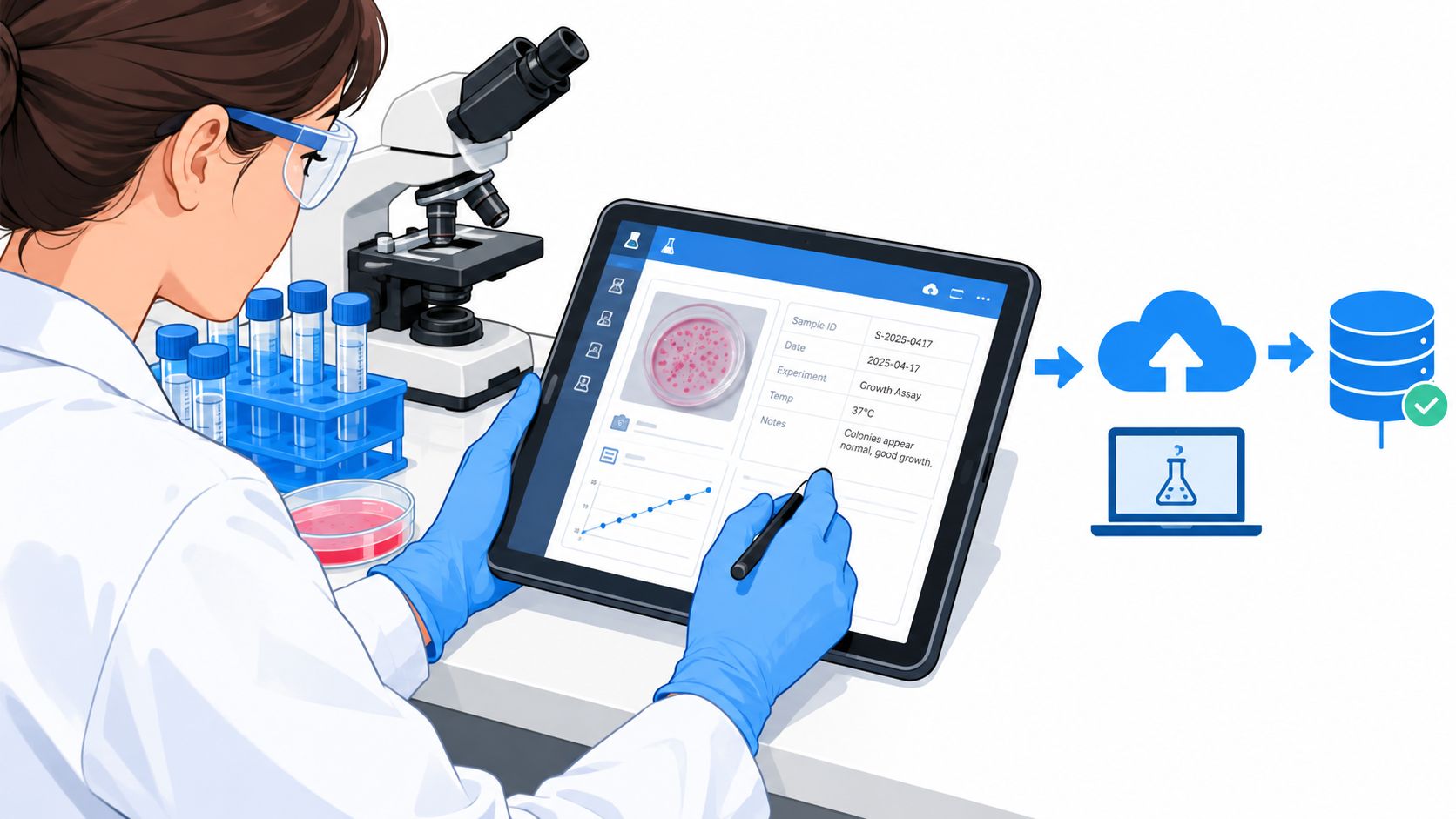
A strong workflow keeps the raw observation alive before it gets translated into the ELN. That can mean voice notes while hands are busy, typed notes when the result is already clear, images of labels or visible changes, and timers for time-sensitive steps. The value is not the format itself, it's that the source context and timestamp stay attached to the observation.
If the note starts as a source-backed capture, the later ELN entry becomes a review step instead of a memory test. That changes the quality of the record in a practical way, because the scientist can compare the draft against the actual source capture instead of relying on recall. It also reduces the odds that a polished summary will erase a small but important deviation.
Transcription should organize, not invent
The safest handoff is from a real-time capture into a structured draft, then into the official notebook or ELN. Voice transcription can help with speed, but it still needs human review against the source observation. Images and timers matter here because they preserve details that are easy to omit when a note is reconstructed later.
Lab rule of thumb: if the bench note can't stand on its own before transcription, the ELN entry is already carrying too much risk.
The internal link between capture and later write-up is critical, which is why teams often need a clear workflow for converting voice notes to text. Not every lab needs the same tool, but every lab needs a way to keep the original observation intact while the record is being organized.
The Gray Area Between Research and Regulation
The hard question is not whether a GMP batch record is regulated, because that answer is obvious. The hard question is what happens during discovery experiments, pilot assays, handwritten-to-electronic transcription, and notes made while operating instruments. FDA states that records required under CGMP, including electronic communications supporting CGMP activities, may be inspected, and that activities should be documented at the time they are performed.
Intended use matters more than project labels
A notebook page does not become irrelevant just because the project is early. If a record later supports a quality, safety, efficacy, or manufacturing decision, the original note can move into the inspected record set. That means the transition is driven by intended use, not by whether the work has reached a filing milestone.
Many labs get trapped by false certainty at exactly this point. Teams assume that exploratory work is outside the data-integrity lens, then discover that the same note later supports a development decision or a quality claim. The record did not change, but its regulatory weight did.
A simple decision framework for lab managers
The useful question is not “Is this project regulated yet?” The useful question is “What role will this record play if someone asks for the evidence later?” If the answer is that the note might support a CGMP-related decision, it needs source-level care from the beginning.
A practical mapping can look like this:
- Exploratory note. Capture the observation with date, operator, and enough context to explain the event later.
- Pilot or development note. Preserve the original capture and avoid silent overwrites, because the record may later support a controlled process.
- CGMP-supporting communication. Treat the message as inspectable data if it informs a regulated activity.
- Transcribed summary. Keep it linked to the source note so the later version can be checked against the original.
That approach is useful because it doesn't force every lab scratch pad into full production controls. It just makes the original record survive the moment when an experiment stops being “just research” and starts informing a regulated decision.
Building an Inspection-Ready Documentation Workflow
A defensible workflow starts at the bench, before anyone starts cleaning up the record. The scientist captures what happened in the moment, identifies the operator, keeps the original entry intact, and records corrections without burying the first version. That is the standard that holds up when QA, a partner, or an inspector asks how the record was built.
A workflow that holds up under review
A practical bench-to-ELN path usually has four steps. Capture the observation with source context. Review the draft while the source is still visible. Complete the record without deleting the original trail. Export or transfer the approved record into the existing documentation system.
Useful standard: a record is strongest when the source capture, the review step, and the final export all remain traceable to each other.
Tooling can support that process, but it cannot replace the habit. Lab Protocol System (Word and PDF protocol templates) is a set of protocol templates for methods work, including a master protocol, experiment plan, SOP, change record, and deviation log, each with a worked example in Word and PDF. For labs that need a separate capture layer before formal notebooking, a private, on-device tool can handle bench notes, timers, typed entries, and images. For a parallel on controlled summarization, see how Loopfour approaches summarization governance.
What QA and lab managers should check
- Training consistency. Confirm that operators know when a source note becomes part of the inspected record.
- Review discipline. Make sure the reviewer compares the structured draft to the original capture, not to memory.
- Correction practice. Preserve prior entries and attach corrections rather than overwriting the first version.
- Export traceability. Keep the exported file tied back to the source capture and review step.
- Record retention. Align storage and retrieval of source material with the lab's retention policy.
The practical lesson is straightforward. Labs waste less time when they stop rebuilding events from memory and start preserving them at the bench. That is where informal notes cross the gray area and become data an inspector can read, compare, and question later.